

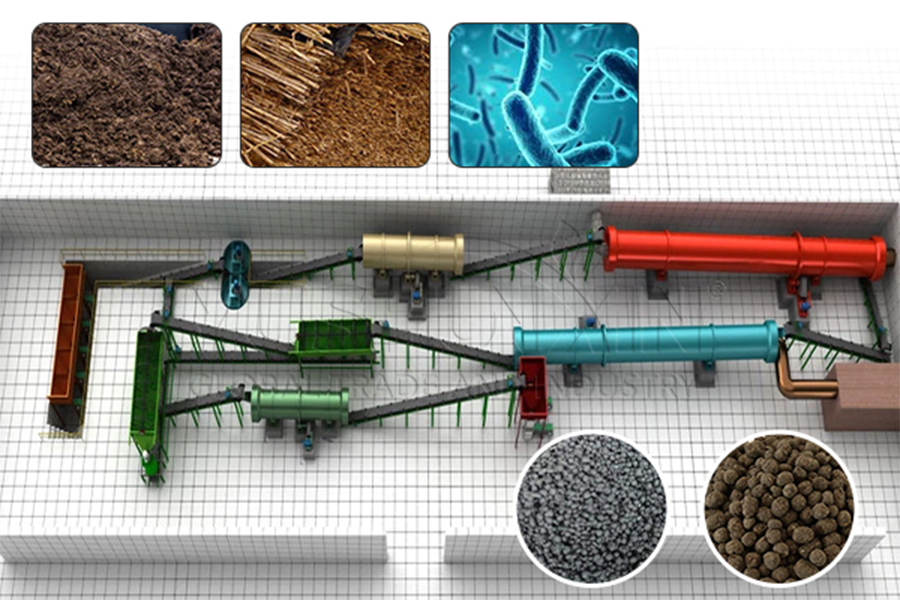
The bio fertilizer market has great potential for development. If you want to start a 15 t/h bio organic fertilizer production project, please consider the three factors of raw materials, market and location in advance. The type of production line you open is the most important, which will determine your production equipment and costs. YUSHUNXIN has a variety of bio fertilizer production machines for you to choose.
What is the process of making 15 tons bio organic fertilizer per hour ?
Most bio fertilizer manufacturer will choose to make granular or powder biofertilizer. The process of making them is different. Next is the detailed manufacturing process.
15 tons/hour powdered biofertilizer production line:
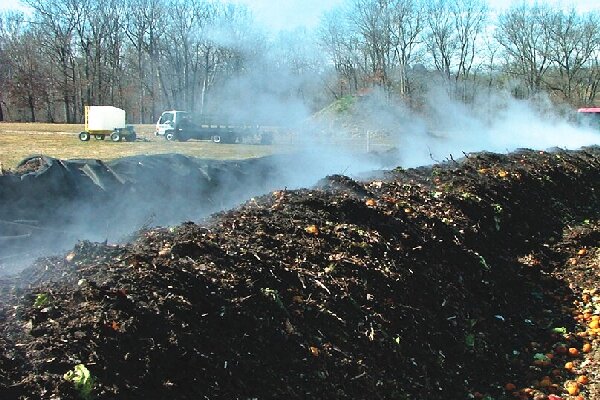
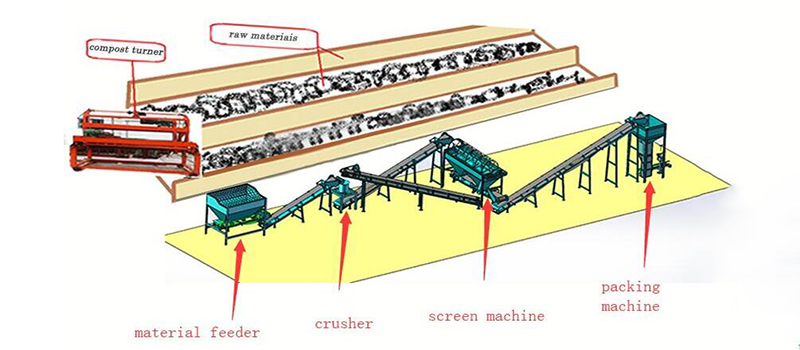
It is easy to produce powder bio organic fertilizer. Composting the organic materials is the first step in the all biofertilizer production line. Compost fermentation can kill harmful substances in waste and increase the content of other nutrients such as nitrogen, phosphorus and potassium in organic waste. Then, you should use the compost shredders to crush the bio compost. Next, you should screen the crushed biofertilizer. On the one hand, sieve out the stones and bricks that may be contained in it. On the other hand, you can get the qualified biofertilizer powder to package. For unqualified powder can be crushed again.
The process of producing 15 tons bio organic fertilizer granules per hour:
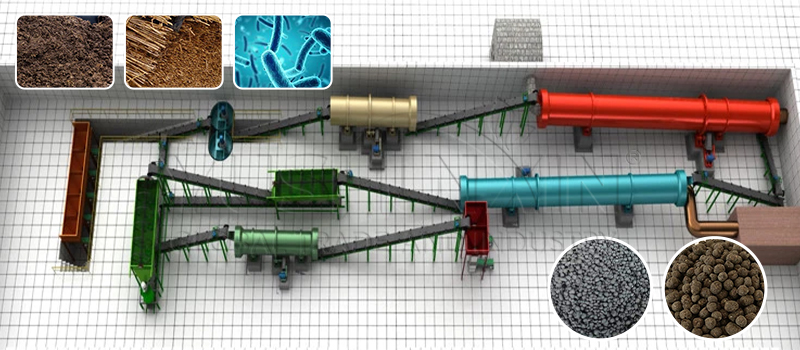
On the basis of making powdered biofertilizer, you can further produce 15 tons/hour bio fertilizer pellets. Select the appropriate granulation equipment to granulate the bio organic fertilizer powder. In order to reduce the water content of the bio-fertilizer particles and ensure their performance, you also need to dry and cool it successively. Then please again screen biological fertilizer granules. This can not only for its classification, and can screen out powder and broken bio organic fertilizer, to make it to granulation.
What equipment is suitable for 15t/h biofetilizer production line?
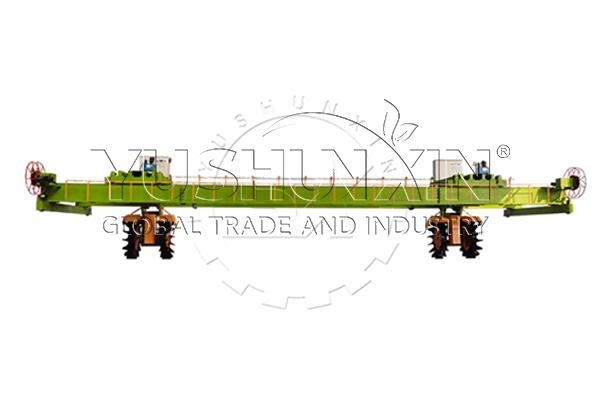
Double Wheel compost turner
To produce 15 tons of bio organic fertilizer per hour, YUSHUNXIN’s two wheel composting machine is the most suitable. It consists of two wheels, walking track, power supply device, walking device and so on. The tipping depth is between 1.5-3 meters, and the maximum tipping width is up to 30 meters wide. Can help you quickly and efficiently turn biological compost, shorten fermentation time.
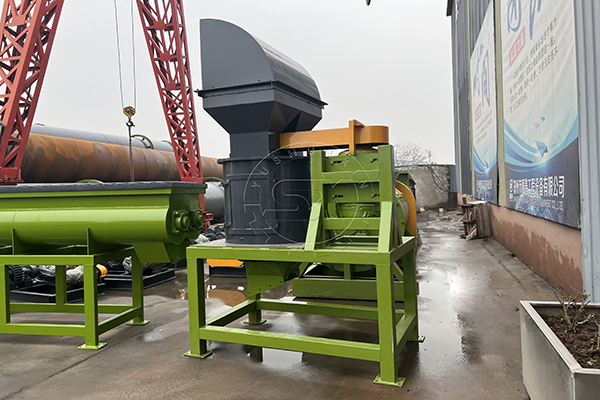
SXFLF-1000 new type crusher
The new vertical crusher is one of the popular crushing equipment of YUSHUNXIN. The SXFLF-1000 is suitable for 15 tons/hour bio fertilizer production project. Its feed port is not easy to plug, and biological compost can be fed into the feed port through a bucket elevator. The blade is spring steel, the material is hard, the crushing effect is good. In addition, we set up an observation window to see the status of the wearing parts, and can complete the replacement within 10 minutes without affecting production.
SXZGZ-2080 biofertilizer drum granulator
When producing 15 tons of bio-organic fertilizer, the choice of bio-fertilizer drum granulator is the best. There are two reasons: First, the drum granulator has a large output, which can produce 15 tons of biological fertilizer per hour. Second, biofertilizers made by wet granulation are hard enough and easier to shape. The drum granulator can be equipped with a spray system to add water or biological bacteria to the biological fertilizer powder. At the same time, YUSHUNXIN’s biofertilizer drum granulator has a lifting plate inside, which evenly turns the particles to prevent clogging.
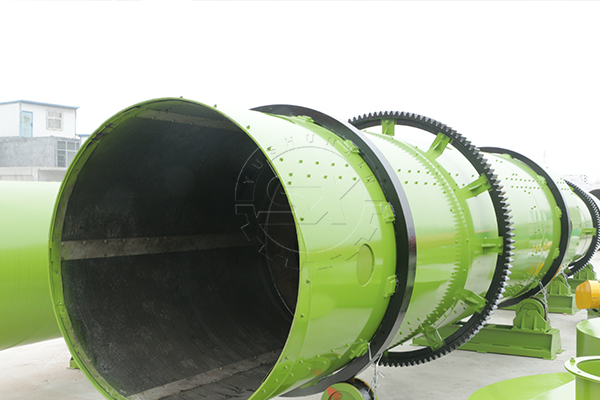
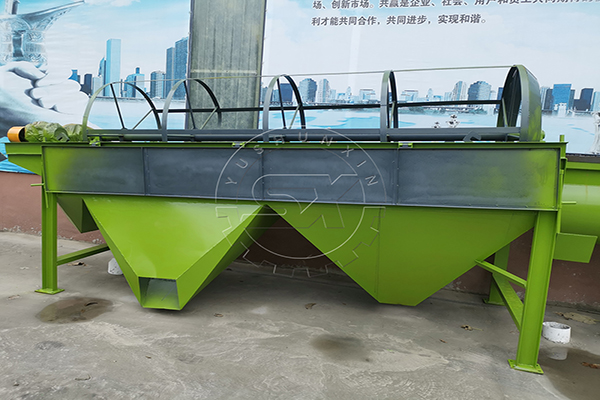
SXGS-1870 rotary screener and SXHG-2020 drum dryer
SXGS-1870 rotary screener: In the production of 15 tons of biofertilizer, you need to use the SXGS-1870 drum screen twice. For the first time, it is necessary to sift out the impurities of the crushed material for better granulation. The second screening is to select bio organic fertilizer particles of the right size.
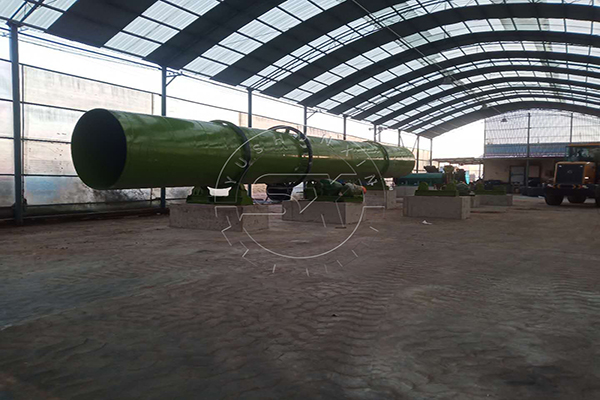
SXHG-2020 drum dryer : The use of biofertilizer dryers can reduce moisture and increase its hardness. YUSHUNXIN’S SXHG-2020 drum dryer, with induced draft fan, can speed up the drying speed of biological fertilizer. The structure is hard, and we chose a 10 mm thick integral spiral tube to ensure the normal operation of the machine.
How much is the 15t/h bio fertilizer production project cost?
The cost of a 15 tons/hour bio fertilizer production project mainly depends on the production process and equipment configuration. Different fertilizer forms require different machines, which directly affects the total investment.
- For a 15 T/H powdered bio fertilizer production line, the typical equipment cost ranges from USD 60,000 to 90,000. This configuration focuses on composting, crushing, screening, and packaging, making it a cost-effective option for investors targeting powder fertilizer markets.
- A 15 T/H granular bio fertilizer production line requires additional equipment such as granulators, dryers, coolers, and coating systems. Because of this, the total investment is higher, usually ranging from USD 360,000 to 550,000.
The final price depends on your raw materials, fertilizer type, automation level, and site conditions. After technical communication, we can provide an accurate quotation and equipment layout plan based on your project needs.
What is the area of the 15 tons/hour bio organic fertilizer manufacturing plant ?
When planning a 15 tons/hour bio organic fertilizer manufacturing plant, land area is another key factor that affects project feasibility and layout design.
- A 15 T/H powdered biofertilizer production line typically requires 3,000–5,000 m² of installation space. The process is relatively simple, so the equipment footprint remains moderate.
- In comparison, a 15 T/H granular biofertilizer production line needs more space due to additional systems such as granulation, drying, cooling, and coating. In most cases, you should prepare 5,500–10,000 m² for equipment installation and material flow.
If land resources are limited, the composting and fermentation area can be arranged outdoors to reduce indoor space requirements. Our engineering team can also help you optimize site planning and equipment layout to make the best use of your available land.
Content


