
Innhold
- What raw materials do you need to make Rhizobium biofertilizer?
- Hvordan bør du behandle råvarene før granulering?
- Hvordan fungerer granuleringsprosessen for Rhizobium biogjødselproduksjon?
- Why does Rhizobium need to be added after granulation instead of during mixing?
- How does the coating machine spray Rhizobium onto fertilizer pellets?
- What equipment does YUSHUNXIN supply for Rhizobium biofertilizer manufacturing?
- How much does it cost to build a Rhizobium biofertilizer production line?
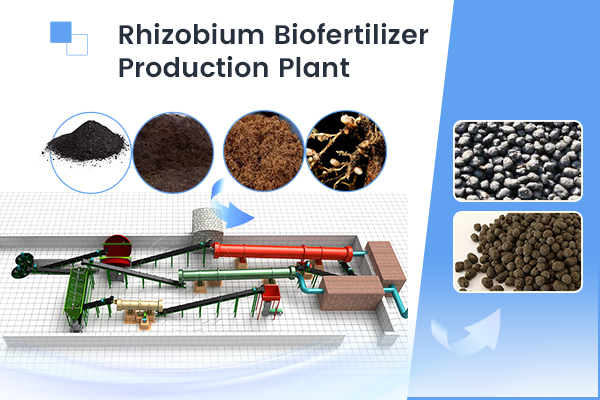
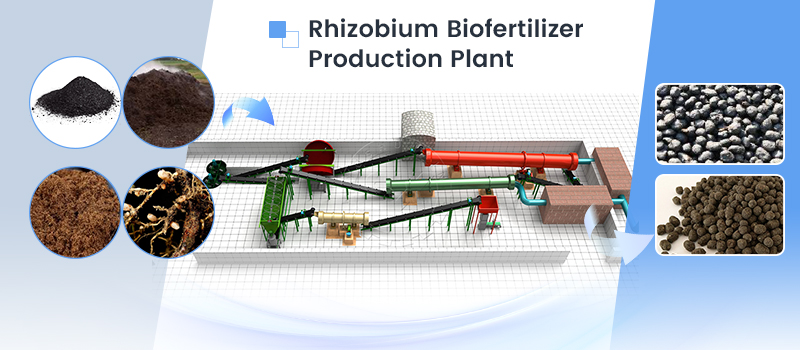
Do you know how to make Rhizobium biofertilizer in a simple and reliable way? The core idea is clear: you first create clean and stable fertilizer pellets, then spray Rhizobium onto the cooled pellets through a coating machine. This physical process protects the bacteria and keeps high activity. To support this workflow, you prepare suitable carriers, granulate them, cool them, and finally apply Rhizobium with a controlled spraying system. With the right equipment setup, you can build a stable and efficient Rhizobium biofertilizer production line.
What raw materials do you need to make Rhizobium biofertilizer?
To make Rhizobium biofertilizer, you must prepare a clean and stable carrier. Many manufacturers use humic acid, torv, compost powder, or well-fermented livestock manure. Disse materialene holder godt på fuktighet og beskytter Rhizobium under lagring. Du bør holde råvarene lave i patogener og tungmetaller fordi forurensede bærere reduserer Rhizobium-aktiviteten.
Hvordan bør du behandle råvarene før granulering?
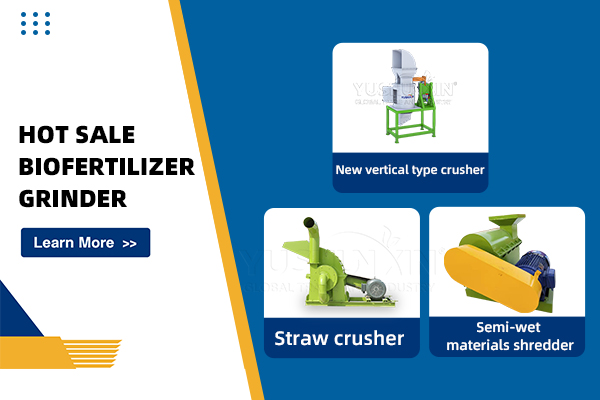
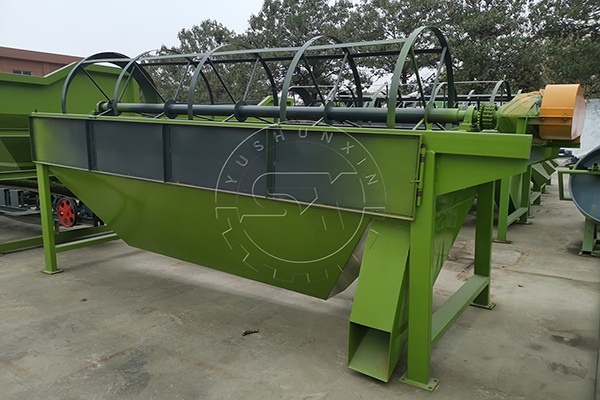
Du må knuse og skjerme bærematerialene først. Knusing skaper jevn partikkelstørrelse. Siling fjerner steiner, plastbiter, eller flis. Etter det, du kan justere fuktigheten til rundt 30%. Dette fuktighetsnivået hjelper materialene med å holde sammen under granulering. Samtidig, en ren, fin bærer forbedrer overlevelsesraten for Rhizobium under belegningsstadiet.
Hvordan fungerer granuleringsprosessen for Rhizobium biogjødselproduksjon?
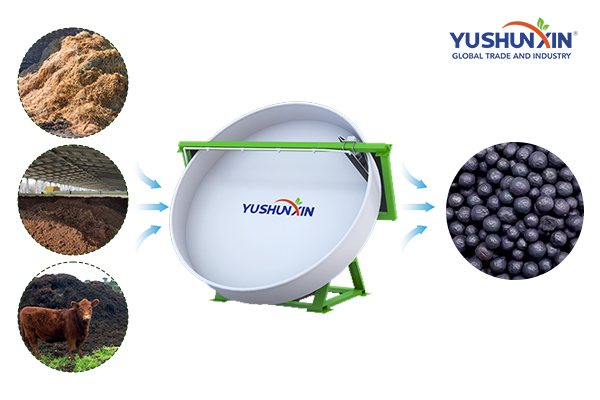
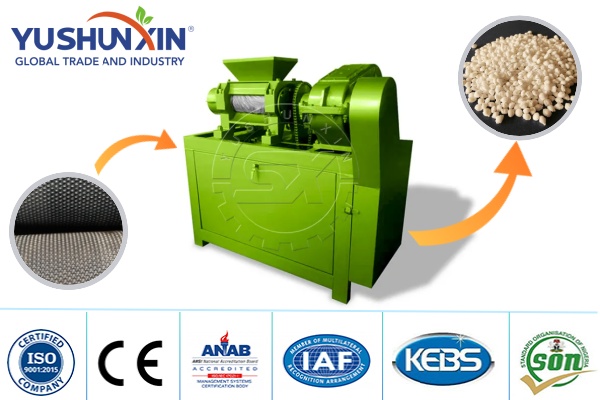
Du kan bruke en Diskgranulator eller en dobbelvals ekstruderingsgranulator for å forme bæreren til pellets. Disc granulation works well with humic acid or organic matter. Roller compaction granulation makes denser and more uniform pellets. Both machines run at low temperature, so the pellets stay suitable for later Rhizobium coating. Etter granulering, you should place the pellets in a natural drying area or a low-temperature drying room.
Why does Rhizobium need to be added after granulation instead of during mixing?
Rhizobium is highly sensitive to heat, fuktighet, and mechanical force. The mixing, Granulerende, and drying stages can kill most of the bacteria. Derfor, manufacturers use a post-granulation coating system. This technology sprays Rhizobium onto cooled pellets inside a coating machine. The coating process protects the bacteria and keeps their survival rate high.
How does the coating machine spray Rhizobium onto fertilizer pellets?
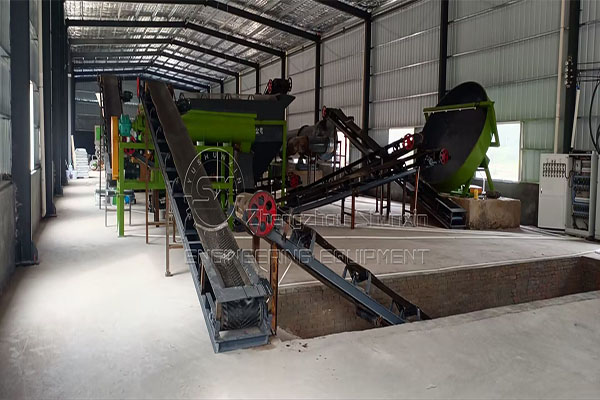
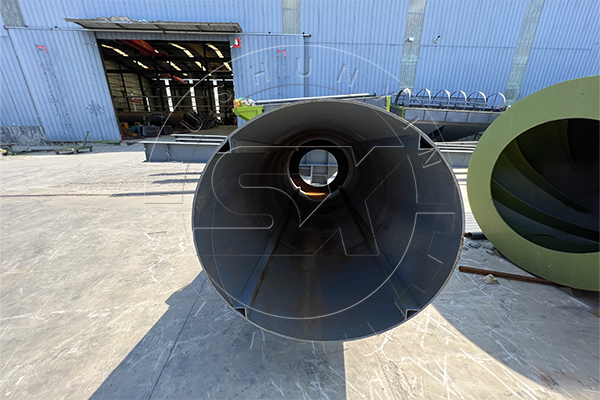
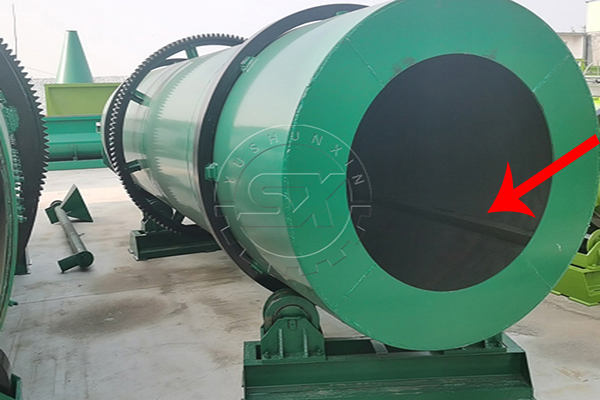
Yushunxin equips the coating machine with a precise spraying system. It includes a fine mist nozzle, a peristaltic pump, and a control panel. When pellets roll inside the drum, the nozzle sprays Rhizobium liquid evenly on their surface. The drum runs at a slow and stable speed. This gentle motion protects the bacteria from heat and friction. The system gives you uniform Rhizobium loading and stable biofertilizer quality.
What equipment does YUSHUNXIN supply for Rhizobium biofertilizer manufacturing?
YUSHUNXIN offers a full solution for Rhizobium-based fertilizers. The main machines include:
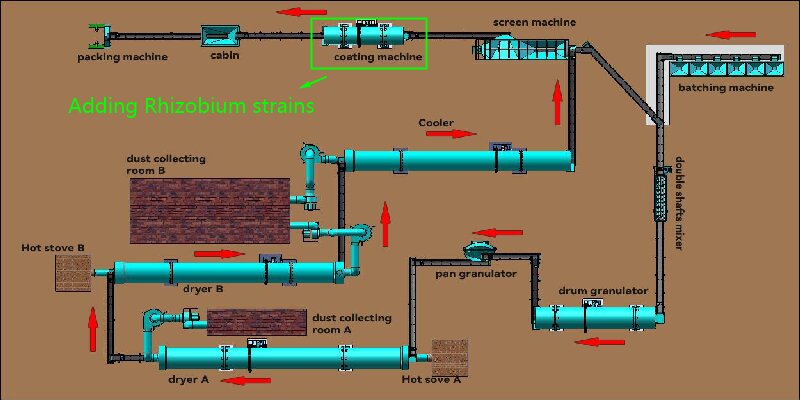
We design each production line based on your raw materials, plant size, og budsjett.
How much does it cost to build a Rhizobium biofertilizer production line?
The cost depends on capacity and equipment configuration. A small 1–5 t/h Rhizobium biofertilizer line price often ranges from $50,000–$100,000. A medium 5-10t/h line may cost $100,000–$150,000. The spraying system usually accounts for a small portion of the investment. You can also upgrade your existing organic fertilizer plant by adding only a coating machine and spraying unit, which reduces cost.